
Freelance Skills: Generalism now beats Specialisation over the long term.

Topic Category: Economics
I recently published a Tweet on “X” that got some amazing response and it really inspired me to take the conversation event further here. The Tweet was:
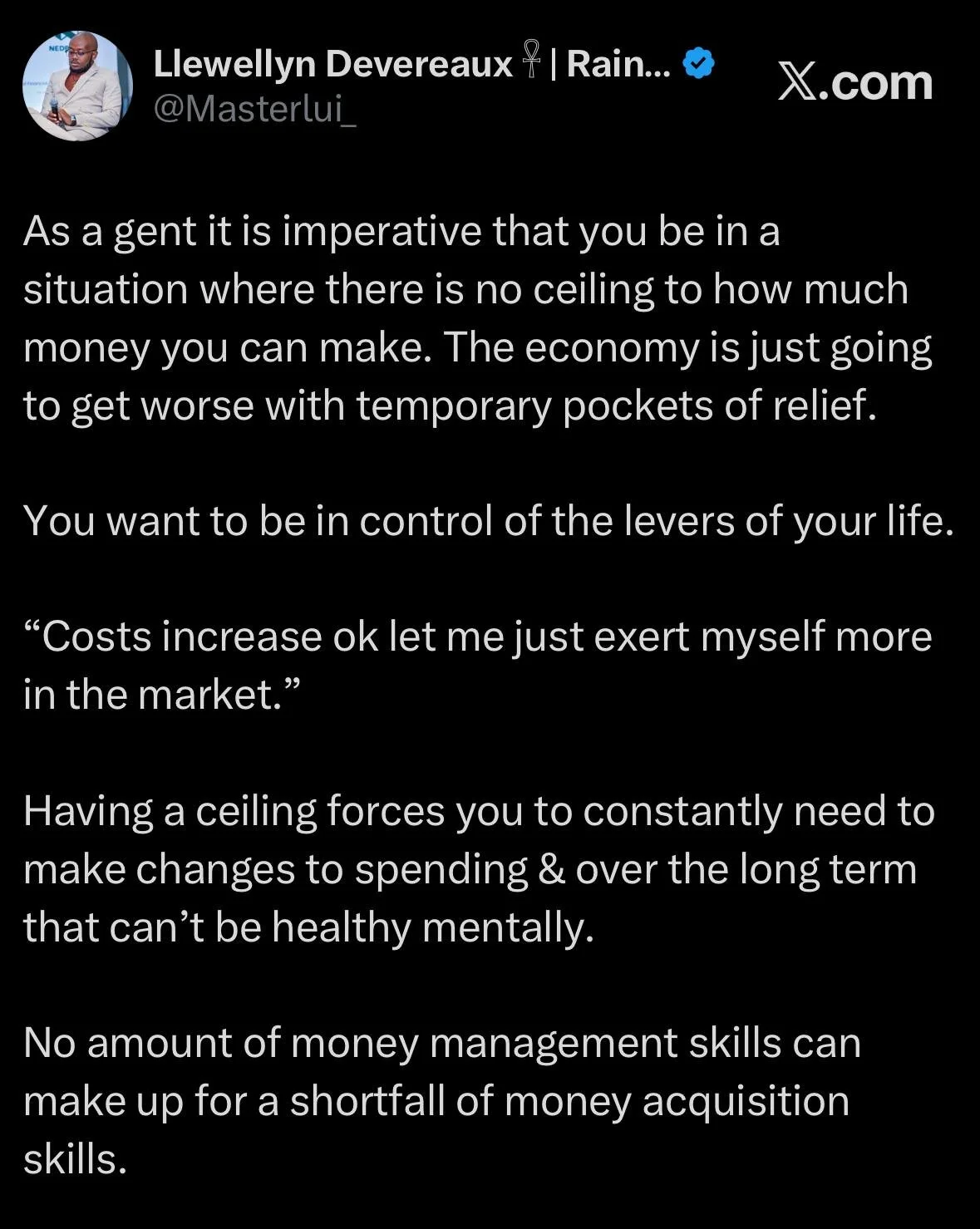
The global economy is currently undergoing a structural shift. The traditional "9-to-5" model, once the gold standard for financial security, is being challenged by rapid technological advancement and market volatility. In this landscape, developing freelance skills is no longer just a way to earn extra pocket money—it is a critical strategy for career resilience.
Here is why cultivating a freelance skill set is essential in the modern economic environment.
1. Diversification of Income Streams
The most significant risk in a traditional employment model is having a single point of failure. If an employer faces a downturn or a sector-wide layoff occurs, a primary income source can vanish overnight. Freelance skills allow you to diversify. By maintaining a small portfolio of clients or the ability to take on project-based work, you create a financial safety net that remains intact even if your primary job is impacted.
2. Adaptation to the AI Revolution
Artificial Intelligence is changing the nature of work at an unprecedented pace. While AI may automate certain routine tasks, it also creates a massive demand for human-centric skills: creative strategy, complex problem-solving, and personalized digital communication. Engaging in freelance work forces you to stay at the cutting edge of these tools. Freelancers are often the "early adopters" of new technology because their efficiency directly impacts their bottom line.
3. Proof of Agility and Continuous Learning
Employers increasingly value "skills over degrees." When you freelance, you are essentially running a business of one. This requires you to master marketing, negotiation, project management, and specialized technical execution. These are highly transferable skills that make you a more attractive candidate for any role. It demonstrates to the market that you are proactive, self-managed, and capable of delivering results in various environments.
4. Leveraging the Global Marketplace
The digital economy has effectively erased geographical boundaries. Someone living in a small town can provide architectural rendering, data analysis, or copywriting services to a firm in a major global hub. This "borderless" work environment protects you from local economic slumps. If your local economy is struggling, your freelance skills allow you to tap into stronger markets elsewhere in the world.
5. Future-Proofing for the Gig Economy
The "Gig Economy" is not a temporary trend; it is an evolution of how labor is organized. More companies are moving toward a "core and periphery" model, where a small team of full-time staff is supported by a network of specialized freelancers. By developing these skills now, you are positioning yourself to thrive in the dominant employment model of the future rather than being left behind by it.
Finding Your Edge
Whether it is coding, graphic design, financial consulting, or technical writing, the goal is to identify a skill that is both in demand and personally engaging. In an era of uncertainty, your greatest asset is not your job title—it is your ability to generate value independently.
Developing freelance skills is an investment in your own agency. It provides the flexibility to navigate economic shifts with confidence, ensuring that no matter how the global market changes, you have the tools to remain relevant and rewarded.
