
The Geopolitical Game of Thrones 2026 edition

Topic Category: Economics
A few weeks ago, we learned that the United States had invaded Venezuela, apprehending President Maduro and his wife over drug-related allegations. Maduro had been quite vocal prior to this, especially when Trump threatened military action, and it turns out he wasn’t merely bluffing. U.S. Secretary of State Marco Rubio remarked in a press briefing: “I hope it is clear now that this is a president of action who doesn’t just talk.” He further added, “If you don’t know, now you know.” Following the capture, it became evident that the situation was largely tied to Venezuela’s vast heavy oil reserves, which are essential for refineries in Texas. Trump then proclaimed that the U.S. now has control over Venezuela, dramatically shifting the geopolitical landscape from an era of soft power to one of hard power.
Fast Forward
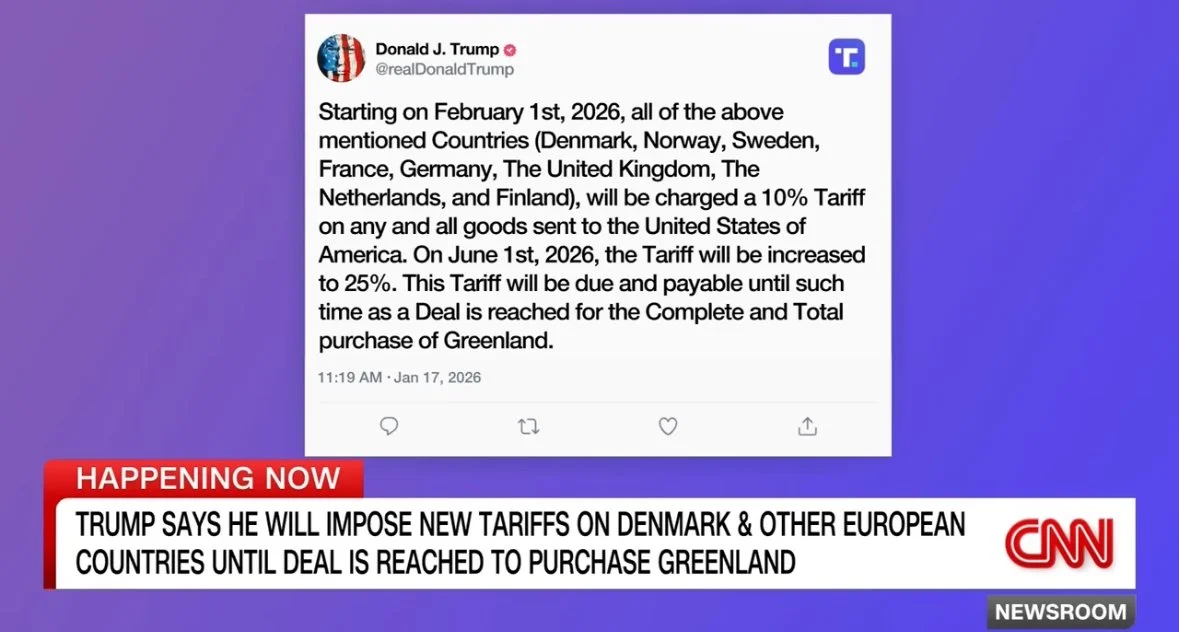
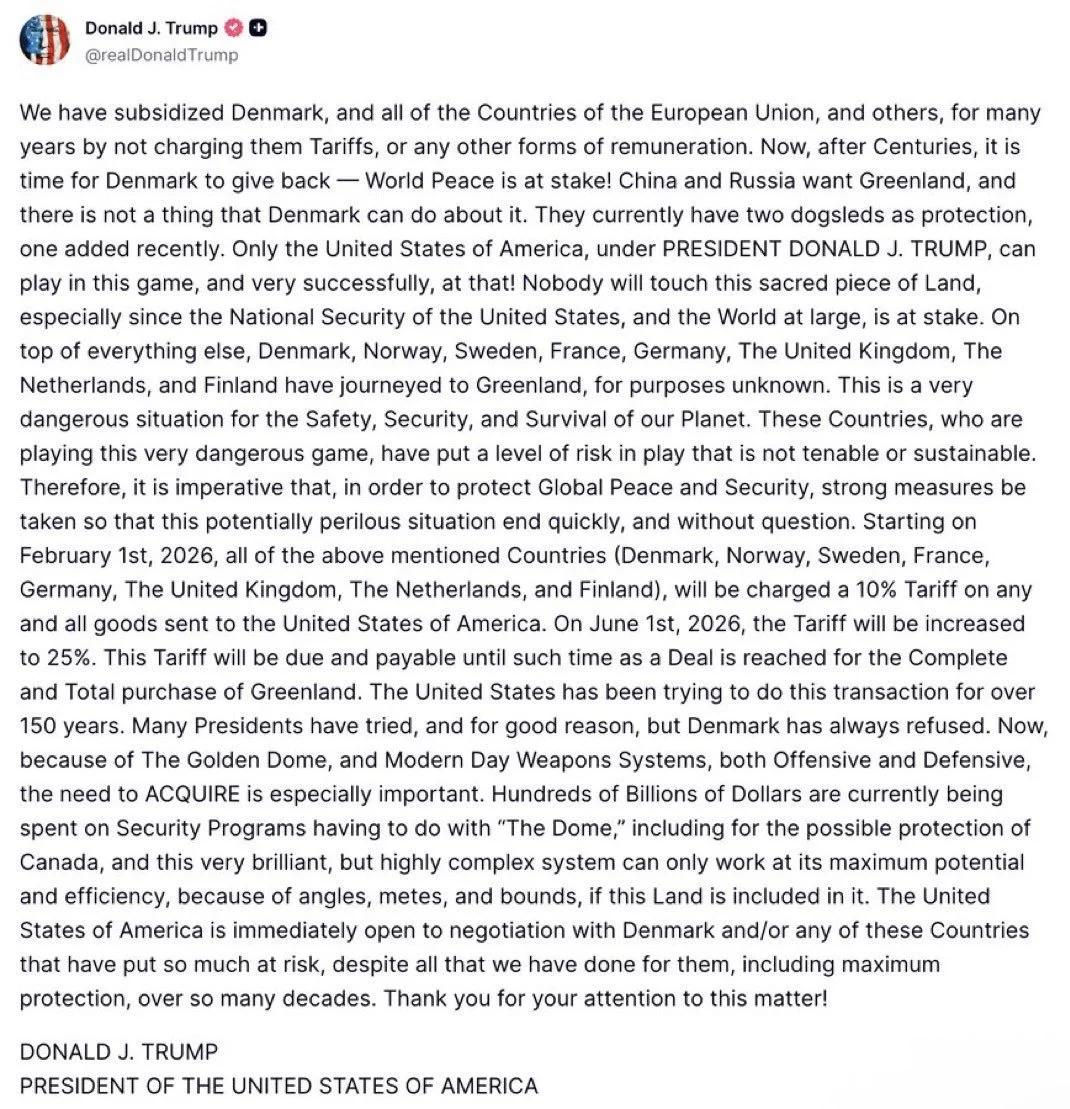
In recent days, Trump has begun discussing the potential acquisition of Greenland for defense purposes against Russia and China, asserting that NATO is unable to sufficiently protect the region. This statement has put the entire EU on high alert. On Truth Social, he made his position clear:
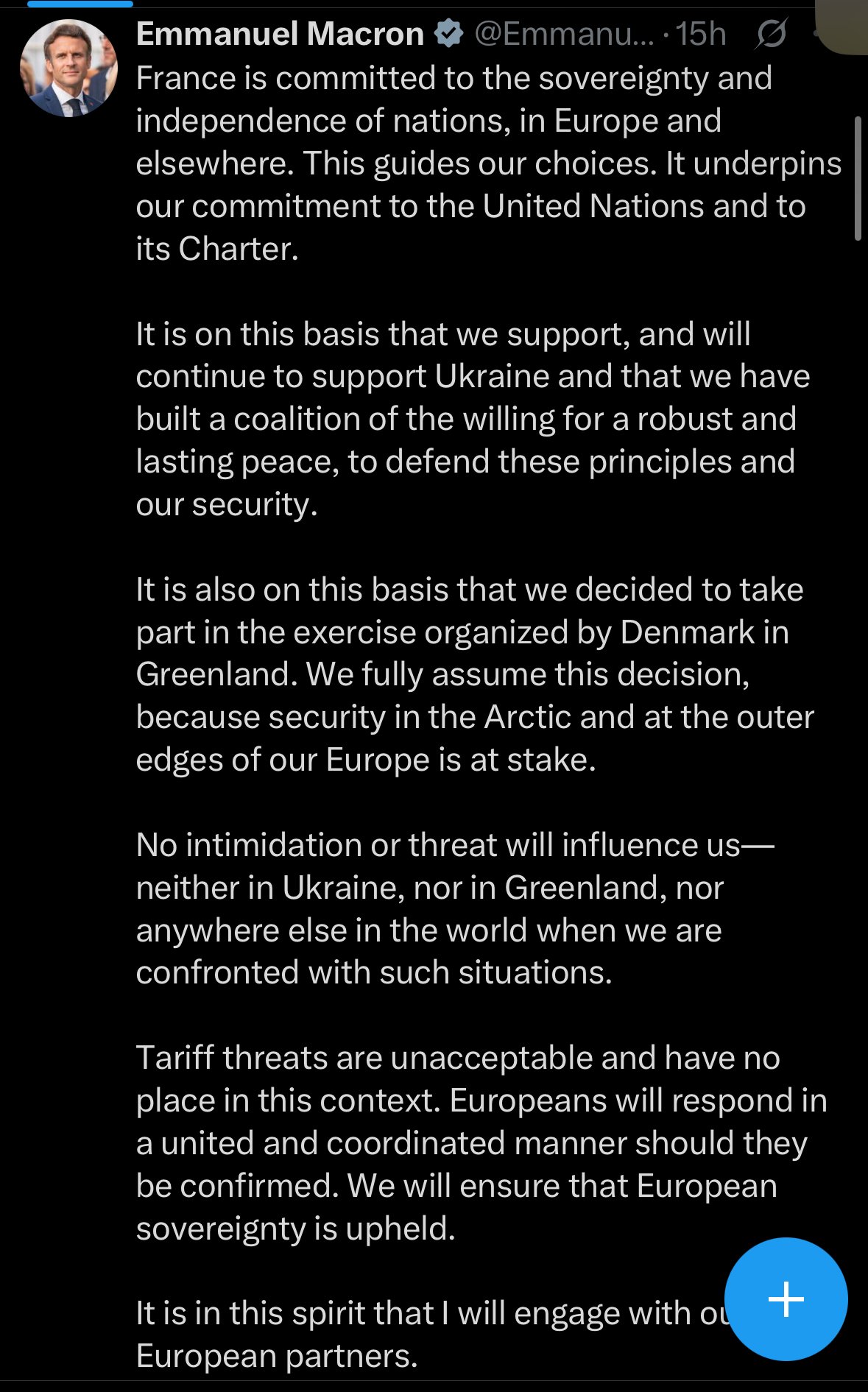
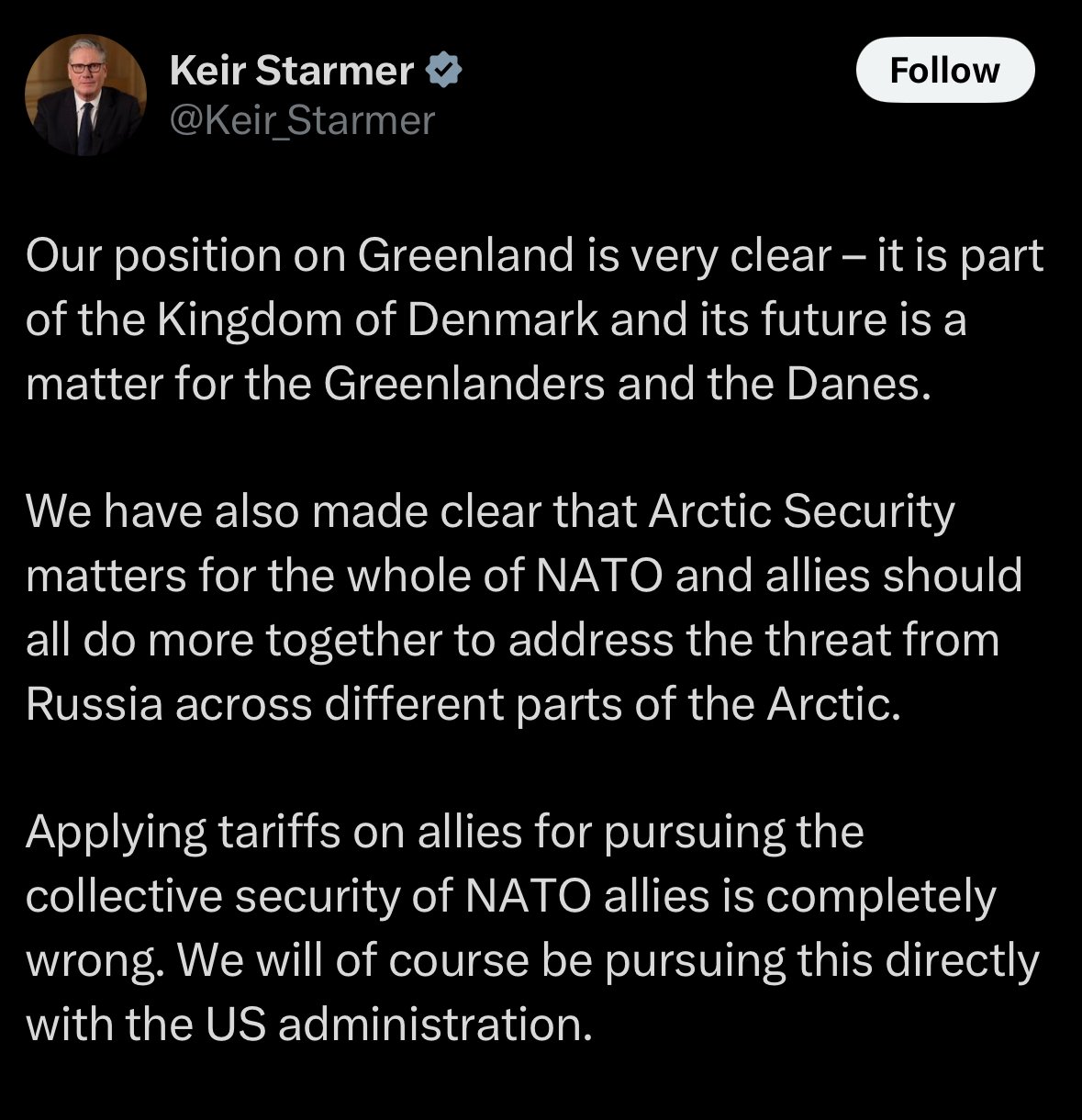
Responses from leaders like Emmanuel Macron of France and Keir Starmer of the UK were shared on X:
As a result, protests have erupted in both the U.S. and Greenland against Trump's actions, particularly as he mentioned imposing 10% tariffs on Denmark, Sweden, Germany, the UK, the Netherlands, and Finland, which will escalate to 25% by June unless a deal to purchase Greenland from Denmark is reached.
The Question for NATO
Greenland is currently a territory of Denmark, a member of NATO, which the USA is also part of. If Trump takes action regarding Greenland, what implications will that have for NATO?
The Fall or the Rise of an Empire?
Since the end of World War II, America has emerged as a hegemonic power. However, it now appears that the USA is witnessing the rise of China and Russia, which it regards as adversaries to the established world order. This realization may lead the U.S. to assert its dominance more decisively. While many view Russia and China as formidable military powers, consider this: in 2024/2025, China allocated $314 billion to its military, Russia spent $149 billion, while the USA spent a staggering $997 billion during the same timeframe. This amounts to nearly a trillion dollars on defense, approximately double the military expenditures of China and Russia combined. The figures alone indicate that neither China nor Russia is close to matching U.S. military capabilities. In comparison, the EU as a whole invested $402 billion in defense.
The pressing question now is whether we have entered an era where the USA has shed its diplomatic gloves and is asserting its power. What does this mean for sovereign states, and how does it affect the relevance of the United Nations, which often seems ineffective in enforcing international law, as evidenced by the situations in Ukraine and Palestine?
It appears that the time for diplomacy may be waning, and we could be entering a period of conflict, as discussions about World War III become more frequent. Historical patterns suggest we are in a crisis period akin to pre-World War II times, following the 80-year cycle (Saeculum) outlined by the Strauss-Howe Generational Theory. The world seems to be heading toward a significant event that could reset the current order and usher in a New World Order that has been anticipated for decades.
The South African Situation
South Africa now finds itself caught in the crosshairs of the U.S., particularly with its case against Israel at the ICJ and its ties to BRICS, Iran, and Russia, which the U.S. considers adversaries. Just last week, Congress addressed its position on South Africa and AGOA, which will now head to the Senate. Both Trump and Marco Rubio have referenced South Africa in press briefings concerning the killing of white farmers and its connections to Iran, Hamas, and Russia. Similar to the Venezuela situation, a narrative is being constructed to justify potential intervention, which has seen similar tactics employed in Nigeria regarding the persecution of Christians. These narratives often precede military actions not approved by Congress, raising the question of what lies ahead for South Africa. It seems that the era of sovereign states may be coming to an end, with the Trump administration poised to act unilaterally in the coming years. Recent naval exercises in Simon's Town with Iran have further complicated matters, leaving uncertainty about the future.
What remains clear is that we are entering perilous times globally, necessitating careful discernment from individuals, governments, and corporations alike.
